RPEEP Is Now Law: What Every Property Manager Must Do Today
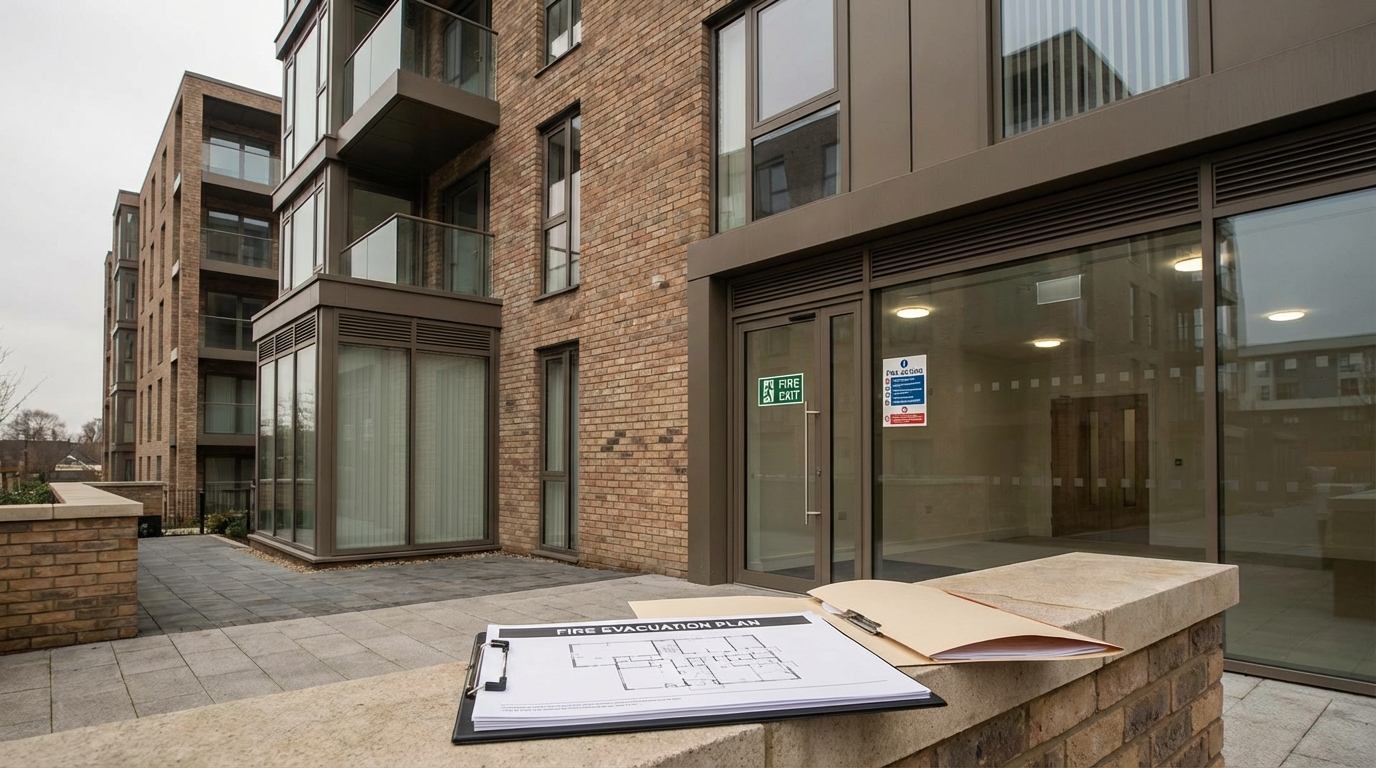
Residential Personal Emergency Evacuation Plans (RPEEPs) became a legal requirement on 6 April 2026. If you manage a residential block in England that is 11 metres or taller — or has seven or more storeys — you are now legally obligated to identify vulnerable residents, offer them a formal fire risk assessment, and prepare written evacuation statements. Criminal prosecution applies for non-compliance. The Fire and Rescue Service can inspect at any time.
Most property managers are not ready. If you haven't started, you're already three days behind.
What Is RPEEP and Why Does It Exist?
RPEEP stands for Residential Personal Emergency Evacuation Plan. The legal name is the Fire Safety (Residential Evacuation Plans) (England) Regulations 2025. These regulations were created in direct response to the Grenfell Tower Phase 1 Inquiry, which identified that residents who needed evacuation support did not receive it.
The inquiry's recommendations were clear: every high-rise residential building must have documented plans for residents who cannot self-evacuate. Parliament acted. The regulations were laid in July 2025 and came into force on 6 April 2026.
This is not a consultation, a proposal, or a future obligation. It is live law — and it has been for three days.
Which Buildings Are in Scope?
The Regulations apply to residential buildings in England that contain two or more domestic premises and meet either of the following thresholds:
- 18 metres or higher, or seven or more storeys
- More than 11 metres in height and currently operating a simultaneous evacuation strategy
A simultaneous evacuation strategy — where all residents evacuate at the same time rather than staying in place — typically applies to buildings with higher fire risk profiles, including older conversions and buildings without compartmentalisation to modern standards.
If you manage multiple blocks, each building must be assessed individually. Managing 10 buildings means assessing 10 buildings.
Who Is the Responsible Person?
Under the Regulatory Reform (Fire Safety) Order 2005, the Responsible Person is whoever has control of the building or its common parts. In practice, this means:
- Managing agents appointed to manage a block
- Building owners where no agent is appointed
- Right to Manage companies and management companies established by leaseholders
- Housing associations for their residential stock
- Local authorities managing social housing blocks
If you are a managing agent, you are the Responsible Person. The obligation sits with you — not the freeholder, not the leaseholders, not your solicitors. You.
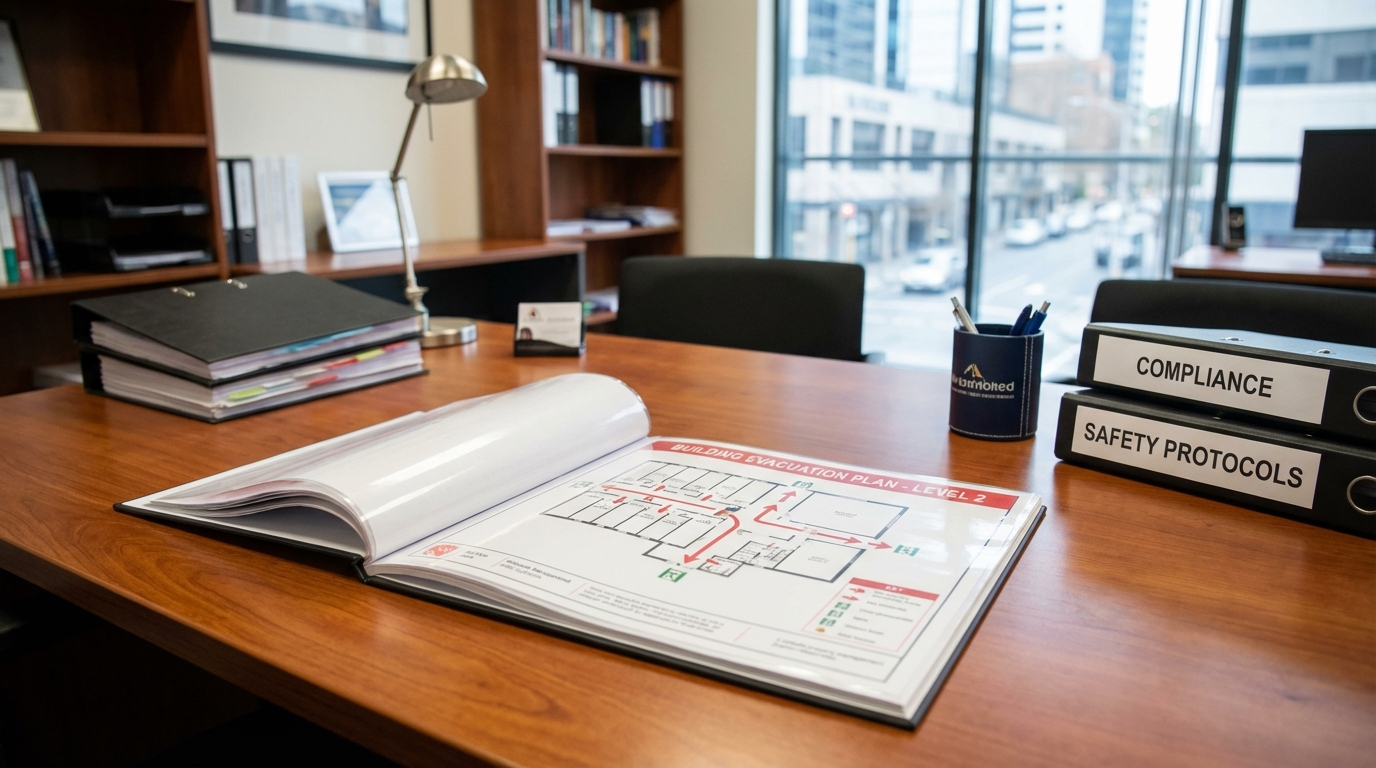
What You Are Now Legally Required to Do
The Regulations impose a structured set of duties. Here is exactly what the law requires:
Step 1: Identify Relevant Residents
Use reasonable endeavours to identify residents who may have difficulty self-evacuating. This includes residents with:
- Physical mobility impairments
- Sensory impairments — sight or hearing loss
- Cognitive conditions or other disabilities
You do not need medical records. You need a reasonable process: a letter to all residents, a form on move-in, a note in the service charge cycle. The obligation is to try, document your attempt, and act on what you learn.
Step 2: Offer a Person-Centred Fire Risk Assessment
Where a relevant resident is identified, you must offer a Person-Centred Fire Risk Assessment (PCFRA). This is a structured conversation — not a medical examination — between you and the resident. No specialist is required. The purpose is to understand the resident's specific circumstances and how their evacuation can be supported.
The resident may decline. That declination must be documented. You offered; they refused. Keep the record.
Step 3: Prepare an Emergency Evacuation Statement
Where the resident accepts, you must produce a written Emergency Evacuation Statement setting out what they should do if a fire breaks out. This is a personalised document — not a building-wide policy. A resident on the 14th floor who uses a wheelchair has different requirements from a resident on the first floor with a hearing impairment.
Step 4: Provide the Statement to the Resident
Once prepared, the statement must be given to the resident. Keep proof of delivery. This matters: if prosecution follows an incident, documented proof that you gave the resident their statement is your first line of defence.
Step 5: Share Information with the Fire and Rescue Service
Where the resident gives explicit consent, you must share the following information with your local Fire and Rescue Service:
- The resident's flat number and floor
- Whether an evacuation statement is in place
- The level of assistance that may be required
This information allows firefighters to prioritise evacuation support in a live incident. It was one of the Grenfell Inquiry's specific recommendations. Consent is required — but if the resident consents, you must act.
Step 6: Review Annually
RPEEP is not a one-and-done exercise. You must review each assessment no later than 12 months after it was first recorded, and at least every 12 months after that — or sooner if the resident's circumstances change or they request a review.
This means building RPEEP into your annual property management cycle, alongside fire risk assessments and safety case reports.
Start your free 7-day trial at compliancealert.co.uk/property-management — no credit card required.
What Happens If You Don't Comply?
Non-compliance with the Fire Safety (Residential Evacuation Plans) (England) Regulations 2025 is a criminal offence.
Prosecution is brought by the Fire and Rescue Authority. Enforcement officers can inspect your buildings, request documentation, and — if they find a Responsible Person has not met the duties — refer the case for prosecution. This is not a civil penalty regime with a fixed fine: it is criminal law, with the potential for unlimited fines and, in serious cases, custodial sentences.
The law came into force 6 April 2026. If your building is in scope and you have not started, you are currently non-compliant. The enforcement clock is already running.
How to Build Your RPEEP Process — A Practical Checklist
Here is a working action plan to get compliant:
- Audit your portfolio. List every building you manage. For each, confirm: is it 11m+ with simultaneous evacuation? Is it 18m+ or 7+ storeys? If yes, it's in scope.
- Write to all residents in in-scope buildings. Introduce RPEEP. Ask them to disclose if they may need evacuation support. Provide a response form. Document the mailout.
- Log responses. Record who responded, who declined, and who identified a need. This is your evidence base.
- Schedule PCFRAs for consenting residents. Use a structured conversation template. Document the conversation and outcomes.
- Prepare Emergency Evacuation Statements. One per relevant resident. Deliver them with proof of receipt.
- Share data with your local FRS where residents consent.
- Set a 12-month review reminder for each assessment in your property management system.
- Update your fire risk assessment. RPEEP integrates with your existing FRA — ensure your fire risk assessor is aware of your RPEEP findings.
Frequently Asked Questions
Does RPEEP apply to all residential buildings?
No. It applies specifically to buildings in England with two or more domestic premises that are either 18 metres or taller (or seven storeys+), or more than 11 metres with a simultaneous evacuation strategy. Smaller buildings are not currently in scope.
What if a resident refuses to engage?
You must document the offer and the refusal. Your obligation is to use reasonable endeavours to identify and support vulnerable residents. If a resident declines at every stage, your documented attempts are evidence that you met the duty. You cannot compel participation.
Do we need a specialist to carry out the assessment?
No. The Person-Centred Fire Risk Assessment is a structured conversation, not a medical examination. Your property manager or a trained member of staff can conduct it. The key is that it is structured, documented, and outcome-led.
What is a simultaneous evacuation strategy?
A simultaneous evacuation strategy means all residents evacuate at the same time when the alarm sounds, rather than staying in their flat and waiting (a "stay put" strategy). Buildings with simultaneous evacuation strategies are often older conversions or buildings that have been assessed as higher risk. Check with your fire risk assessor if you are unsure which strategy applies.
Is this a one-off exercise?
No. Every RPEEP must be reviewed at least annually, or sooner if a resident's circumstances change. This is an ongoing compliance obligation, not a tick-box exercise.
Key Takeaways
- RPEEP is law from 6 April 2026 — England only, for buildings 11m+ with simultaneous evacuation or 18m+ / 7+ storeys
- The Responsible Person must identify vulnerable residents, offer a Person-Centred Fire Risk Assessment, and prepare written Emergency Evacuation Statements
- Information must be shared with the Fire and Rescue Service where residents consent
- Reviews are required at least annually
- Non-compliance is a criminal offence
- If your buildings are in scope and you haven't started, you are currently non-compliant
ComplianceAlert monitors fire safety regulations, building safety law, and all property management compliance changes — and sends you a plain-English alert when something changes or a new obligation lands.
Not sure if your buildings are compliant? Take our free 3-minute Compliance Score quiz — instant results, no sign-up required: compliancealert.co.uk/compliance-score
Start monitoring your fire safety and building compliance obligations today.
compliancealert.co.uk/property-management — 7-day free trial, no credit card required.
Keep regulatory updates in one place
Read regulatory alerts and use a checklist for your sector in the free ComplianceAlert dashboard.
Create your free account →No card needed · Email confirmation required · Email alerts are on paid plans
Have a question?
Ask us about getting started with ComplianceAlert.
Call Alice: +44 23 9433 0468 (network charges may apply) · hello@compliancealert.co.uk


