The Flexible Working Consultation Closes 30 April 2026 — And Employers Have No Idea

The Flexible Working Consultation Closes 30 April 2026 — And Employers Have No Idea
A Government consultation on flexible working closes at 11:59pm on 30 April 2026. Most UK employers don't know it exists. That's a problem — because new statutory obligations for employers will follow automatically, whether you engaged or not. This post explains what the consultation covers, what changes are coming, and what you need to do before enforcement begins.
Contents
What Is the Flexible Working Consultation?
The Government consultation is titled "Make Work Pay: Improving Access to Flexible Working". It is part of the Employment Rights Bill reform programme and covers proposed changes to the right to request flexible working in the UK.
The consultation deadline is 30 April 2026 at 11:59pm. After that, the Government analyses responses and proceeds to implement statutory changes via secondary legislation. The process doesn't pause waiting for employers to catch up.
What makes this unusual is the near-zero awareness among the SMB employers it most affects. Construction firms, hospitality operators, retail businesses, and professional services practices will all face new obligations — yet the consultation has largely flown under the radar outside employment law circles.
The consultation closes whether you respond or not. The regulations come regardless.
What Changes Are Being Proposed?
The consultation builds on the Flexible Working (Amendment) Regulations 2023, which already made significant changes to the right to request. The proposed changes under the "Make Work Pay" agenda go further. Key areas under consultation include:
1. Flexible Working as a Default
The Government is exploring whether flexible working should become the default position, with employers required to offer flexible arrangements unless they can demonstrate a legitimate business reason not to. This would reverse the current position where employees request and employers respond.
2. Broader Definition of Flexible Working
The consultation covers expanding what counts as a flexible working request, potentially including not just hours and location but also predictable shift patterns, compressed hours, job-sharing, and term-time working as protected arrangements.
3. Strengthened Employee Rights
Employees currently have the right to make two flexible working requests per year. The consultation includes proposals to increase this, shorten employer response timescales, and strengthen enforcement where requests are unreasonably refused.
4. Day-One Rights
Since 6 April 2024, employees have had the right to request flexible working from day one of employment (previously 26 weeks). The consultation considers whether the obligation to accommodate goes further than the right to request — a significant shift for small employers.
5. Carer Flexibility
Specific provisions for employees with caring responsibilities are under review, following the introduction of unpaid carer's leave in April 2024. The consultation looks at whether flexible working protections for carers should be strengthened and more tightly enforced.
Who Is Affected?
Every UK employer is in scope. There is no small business exemption. The flexible working right applies to all employees regardless of company size, sector, or employment type (full-time, part-time, fixed-term).
The sectors most exposed to the proposed changes are:
- Hospitality: Flexible working requests from front-of-house and kitchen staff are already rising. Proposed default flexibility would significantly constrain shift pattern management in restaurants, pubs, and hotels.
- Retail: Sunday trading hours, seasonal peaks, and condensed rotas are central to retail operations. A broader definition of flexible working could require employers to justify these patterns formally.
- Construction: Site-based working and project delivery schedules make full flexibility impractical, but employers will need documented reasons to refuse requests — not just operational preference.
- Professional Services: Law firms, accountancies, and consultancies already field frequent flexible working requests. Stronger enforcement means every refusal needs to be legally defensible.
- Healthcare: Care home operators and community health providers managing complex shift patterns will need clear flexible working policies aligned to the new obligations.
If you employ anyone in the UK, these changes affect you.
What Does Current Flexible Working Law Say?
Before understanding what's changing, it helps to know where we currently stand. Under the Employment Rights Act 1996 as amended:
- Employees have the right to request flexible working from day one of employment (since April 2024)
- Employers can make up to two requests per 12-month period
- Employers must respond within two months
- Refusals must cite one of eight statutory business reasons
- Employees can appeal a refusal — and may bring an employment tribunal claim for procedural failures
Employment tribunal awards for flexible working breaches are currently capped at eight weeks' pay. However, if the consultation leads to day-one unfair dismissal rights (linked to the wider Employment Rights Bill reforms), an employee dismissed for pursuing a flexible working request could bring a much larger unfair dismissal claim from January 2027 onwards.
The connection matters: the flexible working consultation doesn't sit in isolation. It overlaps with the Employment Rights Bill's unfair dismissal changes, which take effect from July 2026 trigger dates onwards. Any employer who handles a flexible working dispute carelessly in the next six months may be setting themselves up for a larger tribunal risk in 2027.
What Happens After 30 April?
Consultations under the Employment Rights Bill programme are moving to implementation faster than usual. The Government has made clear that "Make Work Pay" is a legislative priority. After April 30:
- Consultation closes. The Government has typically used an 8–12 week analysis period before publishing its response.
- Response published. Likely summer/autumn 2026. This will confirm which proposals proceed to legislation.
- Secondary legislation drafted. Amending regulations are typically laid before Parliament with a short commencement period — sometimes 4–8 weeks.
- New obligations in force. End of 2026 or early 2027 is the realistic window for implementation, based on current Bill timelines.
Employers who have up-to-date flexible working policies now will need minimal adjustment. Those without any written policy — or operating on informal arrangements — face the most catch-up work.
ComplianceAlert monitors the flexible working consultation and will alert you the moment new regulations are confirmed. Free forever plan — no card required.
Get Free Alerts →What Employers Should Do Now
You don't need to wait for the consultation outcome to act. There are three things every employer should do before 30 April:
1. Check You Have a Written Flexible Working Policy
If you don't have a written policy, you're already exposed. A flexible working policy doesn't have to be complex — it needs to set out the process for requests, who handles them, response timescales, and the business reasons that may justify a refusal. Under current law, you need this now. Under proposed new rules, the bar for documented refusals will likely rise.
ComplianceAlert's Document Library includes a flexible working policy template — ready to download, customise, and use. It's included in the free forever plan.
2. Audit Your Current Arrangements
Do you know how many of your staff are on informal flexible arrangements? If those arrangements aren't documented, they may not be enforceable — and any change you make to them could trigger a claim. Map your current workforce against their working patterns. If any arrangements differ from the contracted hours, get them written up.
3. Train Your Line Managers
Most flexible working tribunal claims don't arise from policy failures — they arise from managers handling requests badly. A manager who dismisses a request verbally, delays the formal process, or retaliates against an employee for asking is creating legal liability. Line manager training on the process and the eight statutory reasons for refusal is cheap insurance against a tribunal claim.
4. Respond to the Consultation (Optional but Useful)
If you have strong views on how the proposed changes would affect your business, you have until 11:59pm on 30 April 2026 to respond. The GOV.UK consultation page has the response form. SMB employers are underrepresented in these consultations — your input shapes the final regulations.
Frequently Asked Questions
Can I still refuse a flexible working request after the consultation?
Yes — but you'll need to cite one of the statutory business reasons and document your decision. The consultation may strengthen the employee's right to challenge a refusal, but outright refusals based on legitimate operational grounds will remain possible. The key is documentation.
Does flexible working law apply to zero-hours employees?
Yes, if they are employees rather than workers. Zero-hours contracts became subject to significant new rules under the Fair Work Agency's mandate from April 2026, including guaranteed hours obligations. Flexible working rights are separate but intersect — employees on unpredictable schedules are increasingly likely to make formal flexible working requests.
What are the eight statutory reasons to refuse a flexible working request?
An employer can refuse if granting the request would cause: (1) extra costs that are a burden on the business; (2) inability to reorganise work among existing staff; (3) inability to recruit additional staff; (4) detrimental impact on quality; (5) detrimental impact on performance; (6) detrimental effect on ability to meet customer demand; (7) insufficient work during the proposed hours; (8) planned structural changes. All eight relate to business impact — personal preference isn't sufficient.
What's the penalty for mishandling a flexible working request?
Currently up to eight weeks' pay for procedural failures. Where a request is linked to discrimination (caring responsibilities, disability, protected characteristic) the claim value is uncapped. From January 2027, employees hired from July 2026 with unfair dismissal rights from month six will have far greater leverage if dismissed in connection with a flexible working request.
Is there a template I can use for flexible working requests and responses?
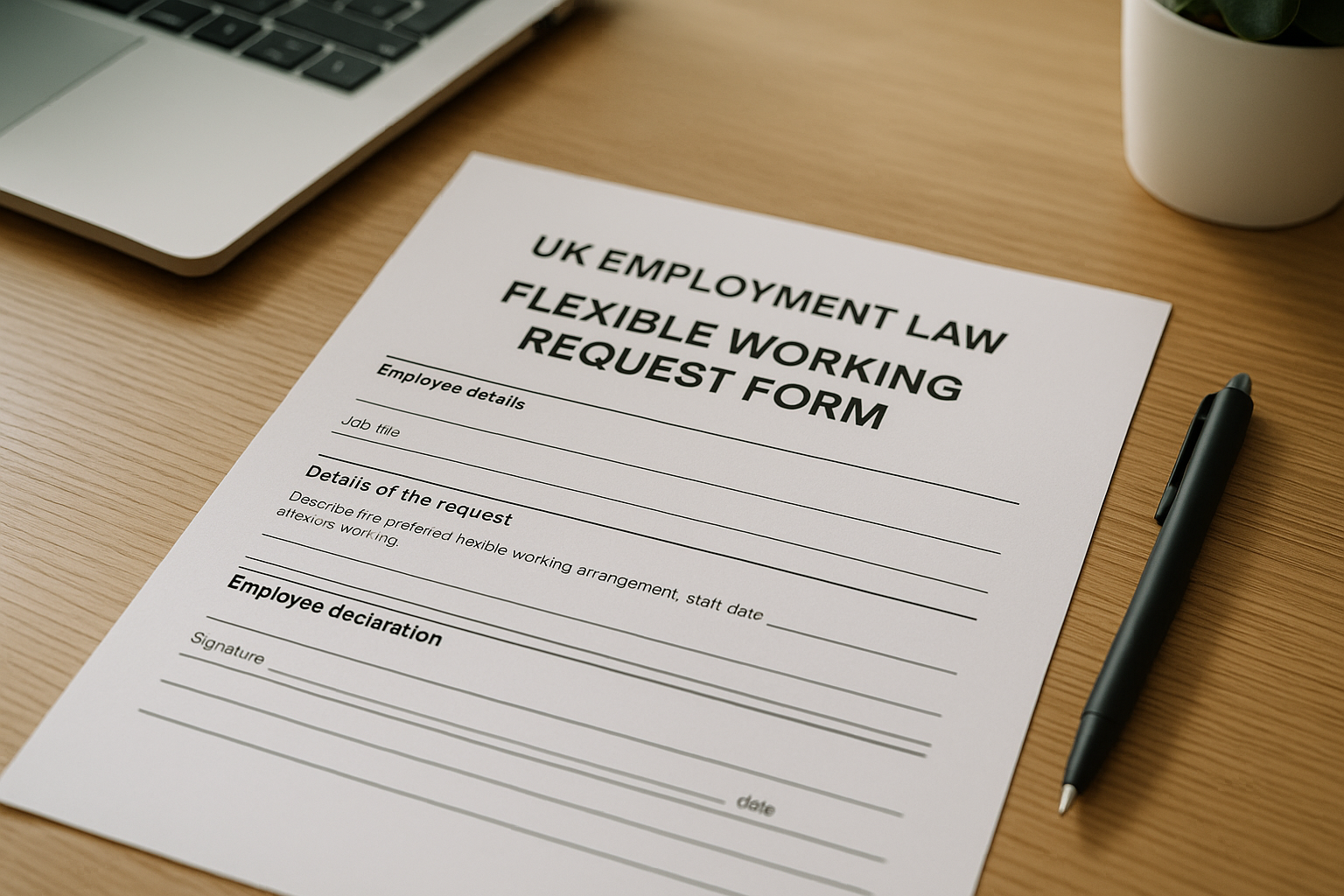
Yes — ACAS has free guidance and template letters. ComplianceAlert's Document Library also includes a flexible working policy and request form template, accessible on the free forever plan.
Key Takeaways
- The "Make Work Pay: Improving Access to Flexible Working" consultation closes 30 April 2026
- New statutory obligations for employers will follow — the regulations come whether you engaged or not
- Every UK employer is in scope — there is no SMB exemption
- The most exposed sectors are hospitality, retail, construction, professional services, and healthcare
- Proposed changes include flexible working as a default, broader definitions, and stronger enforcement
- The safest actions now: written policy, documented arrangements, manager training
- Changes likely in force end of 2026 or early 2027 — overlap with unfair dismissal reforms creates compound risk
ComplianceAlert monitors the Employment Rights Bill, the flexible working consultation, and all related secondary legislation. When new obligations are confirmed, you'll get a plain-English alert before enforcement begins — free forever, no card required.
Don't find out about new flexible working rules from an employment tribunal letter.
Start Free at ComplianceAlert →Free forever plan · No card required · Covers all UK sectors
Need professional help reviewing your flexible working policy or handling a complex request? Find a verified HR consultant or employment lawyer at compliancemarket.co.uk/hr-consultants.
Sources: GOV.UK — Make Work Pay: Improving Access to Flexible Working | ACAS — Flexible Working Guide | Employment Rights Act 1996
Keep regulatory updates in one place
Read regulatory alerts and use a checklist for your sector in the free ComplianceAlert dashboard.
Create your free account →No card needed · Email confirmation required · Email alerts are on paid plans
Have a question?
Ask us about getting started with ComplianceAlert.
Call Alice: +44 23 9433 0468 (network charges may apply) · hello@compliancealert.co.uk


